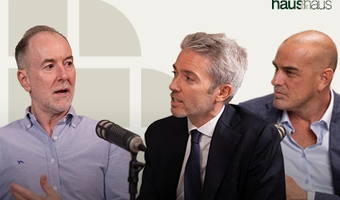
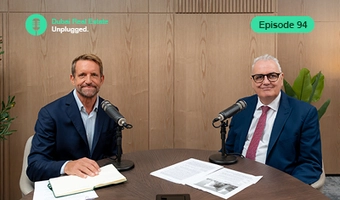
In this bonus episode of Unlocking Success at haus & haus, international real estate coach Josh Phegan speaks with Harrison Rackham-Beadle and Talia Besser about what it takes to become phenomenal in sales.
From building long-term client relationships to understanding the lifetime value of customers, they share practical advice for new real estate agents and experienced professionals navigating Dubai's dynamic property market.
Key takeaways
- Every client represents minimum six transactions through upsizing, downsizing, investment purchases and referrals, making relationship building essential for long-term success.
- Starting in leasing provides foundation knowledge about areas, buildings and customer relationships before transitioning to higher-earning sales roles.
- Established residential communities offer stronger relationship-building opportunities than off plan developments through tangible daily interactions and community presence.
- After-sale service and consistent client communication prevent competitors from poaching relationships and generate repeat business and referrals.
- Dubai's vision, infrastructure development and entrepreneurial environment create exceptional opportunities for real estate agents from Western countries seeking career growth.
Why Dubai and why real estate sales
Harrison Rackham-Beadle and Talia Besser arrived in Dubai from London and Australia respectively, drawn by opportunity, lifestyle and career potential unavailable in their home markets.
Harrison's journey began in 2016 after years on "the same train, same office, same people" in London. "I applied for a job online that said live in the sun, tax-free, earn £200,000 a year, which sounded good enough to me," he recalls. "Here I am eight years later."
Talia initially relocated for personal reasons with limited knowledge about Dubai's property market. "Back then not many people knew about the opportunities in Dubai," she explains. "In the last couple of years, definitely this year, there's a lot more people asking me about the opportunities here."
Both discovered that sales represents one of the last professions where compensation directly reflects results rather than time invested. "Sales is one of the most unbelievable environments in any marketplace because ultimately it's really upon your attitude as an individual about what you can go and create," Josh emphasises.
This performance-based compensation model attracts ambitious professionals seeking control over income potential. Success depends on strategy, effort and skill rather than arbitrary salary caps or corporate advancement timelines.
The leasing to sales pathway
Harrison spent two years in leasing before transitioning to sales, a common pathway that provides essential foundation knowledge whilst generating income during the learning phase.
"Leasing is a good starting place, a good opportunity and there can be a lot of money there, but sales is where obviously the big bucks is," Harrison explains.
Leasing builds crucial expertise about areas, buildings, community characteristics and market dynamics. Agents learn property features, tenant preferences, pricing structures and neighbourhood distinctions that inform later sales activities.
"The big conversation is that leasing gets you the foundation about areas, about buildings, about knowledge, building up a repertoire of key customers that you can go and have conversations with," Josh notes.
Property owners managing investment portfolios through leasing agents represent ideal future sales clients. They already own properties, understand investment principles and actively seek portfolio expansion opportunities.
"People that own multiple investment properties are great people to work with because they've got a principal place of residence but also two other investment properties that later on you could go and sell," Josh explains. "You're actually building a database."
This organic database development creates competitive advantage. Rather than cold calling strangers, agents cultivate relationships with property-owning clients who eventually need sales services as circumstances change or portfolios expand.
Established residential versus off plan sales
Josh, Harrison and Talia focus their discussion on established residential sales rather than off plan developments, highlighting distinct advantages for relationship building and long-term business development.
"If you're working in a ready community where people are living there, you can build these long-lasting relationships," Harrison explains. "You can sell someone a house, they could live there for a number of years and then they want to upsize to a two-bed, to a three-bed, or from a townhouse to an independent villa."
Established communities enable tangible daily interactions impossible in off plan environments. Agents attend community events, visit local supermarkets, walk neighbourhood streets and engage residents through natural encounters that build familiarity and trust.
"You can really get embedded in the community and build a name to yourself within the development or community," Harrison notes. "It's much more tangible when you can walk around the streets, go to community events, talk to people in the supermarket."
Talia exemplifies this relationship-building advantage through recent client experiences. "Last month I did two transactions with the same client. I've sold them now four properties," she explains. "They bought a house for them to live in first, then a year later they bought an investment townhouse, then they called me back and said we're looking for an investment and it ended up being they wanted two investments."
This progression from primary residence through multiple investment purchases demonstrates the lifetime value potential within established community relationships.
Understanding lifetime customer value
Josh introduces the concept of lifetime customer value, arguing that every client represents minimum six transactions when properly serviced over time.
"Someone might buy something from them to live in, they go and buy an investment property, maybe their family grows they need a bigger home, then they buy another investment property, maybe they're in a position they have to downsize, maybe another investment property," Josh outlines.
Beyond direct transactions, referral networks multiply value exponentially. "Think about every single one of those deals, they refer you on to someone else. That's literally 12 transactions from that one contact," Josh calculates.
This perspective transforms how agents approach client relationships. Rather than viewing each transaction as isolated commission opportunity, successful agents cultivate long-term partnerships generating recurring business and referral networks.
"As long as you keep in touch with your clients, look after them when you're doing the transaction, don't just go 'deal's done, I don't need to speak to you anymore,' it shouldn't be that attitude," Talia emphasises.
Dubai's transient population and investment-focused property market accelerate this lifecycle. Clients frequently buy, sell and invest as careers develop, families grow and financial circumstances evolve, creating continuous transaction opportunities for agents maintaining relationships.
The importance of after-sale service
After-sale service represents critical competitive differentiation in Dubai's crowded agent marketplace where competitors constantly pursue established client relationships.
"In Dubai there are so many agents and there's so much access to people's information like phone numbers, so another agent can call your client and say I've got a buyer for you and it can happen that they can sell," Talia warns.
Consistent client communication and genuine service prevents relationship poaching. Clients receiving ongoing value, market updates and personal attention remain loyal rather than entertaining competitor approaches.
"Don't leave people with the sold sticker," Josh advises. "What do we actually do right the way through?"
After-sale service includes property handover support, move-in coordination, contractor recommendations, community introductions and periodic check-ins ensuring client satisfaction extends beyond transaction completion.
These touchpoints maintain top-of-mind awareness. When clients or their networks require property services, agents providing consistent value receive first consideration rather than competing in crowded marketplaces where relationships don't exist.
"You're remembered," Talia explains. "They will maybe buy three, four, five, six more properties in the future."
Essential qualities for real estate success
Josh, Harrison and Talia identify several characteristics distinguishing phenomenal real estate agents from average performers.
Relationship focus over transaction focus represents the primary differentiator. Agents prioritising long-term client value rather than immediate commission maximise lifetime earnings through repeat business and referrals.
"Really just looking after that client, doing everything you can for them so you're remembered," Talia advises as her primary success principle.
Proactive communication maintains relationships during inactive periods. Rather than waiting for clients to initiate contact when needing services, successful agents provide regular market updates, community news and personalised insights demonstrating ongoing value.
Strategic thinking about client potential prevents underestimating relationship value. "You don't realise when you're selling them that one property in Savannah that they have the money or they are going to continue to invest," Talia reflects.
Professional persistence through challenging periods separates successful agents from those who quit during difficulties. "A lot of agents give up during the correction phase and they think they've failed," Harrison observes. "If they just stuck it out for another six months or a year, they would have been fine."
Market knowledge and community expertise build client confidence. Agents demonstrating deep understanding of neighbourhoods, property values, infrastructure development and market dynamics position themselves as trusted advisors rather than transactional facilitators.
Navigating market cycles
Dubai's property market experiences pronounced cycles requiring strategic adaptation and emotional resilience. Harrison and Talia both entered during growth phases but faced challenging correction periods testing commitment.
"When you're starting off in the market, you don't know any different," Harrison reflects. "2018 was when it really started declining and that was quite a learning experience because deals were falling through left, right and centre."
Market corrections separate committed professionals from opportunistic participants. "A lot of agents give up during the correction phase and they think they've failed," Harrison notes. "Actually, as an agent who managed to get through the correction, you come out the other side learning so much."
Surviving downturns requires financial preparation, strategic focus and confidence that markets eventually recover. Agents maintaining activity, serving existing clients and prospecting new relationships position themselves for explosive growth when conditions improve.
"If they just stuck it out for another six months or a year, they would have been fine because look at the market now," Harrison observes. "Being able to weather the storm and being strategic with your money during those times is quite critical."
Understanding cycle patterns helps agents time career transitions, investment decisions and business development strategies. Growth phases reward expansion and prospecting, whilst corrections favour relationship deepening and skill development.
Building competitive advantage through knowledge
Market knowledge, community expertise and process mastery create defensible competitive advantages that pure sales ability cannot replicate.
Agents understanding neighbourhood characteristics, school quality, infrastructure development, community demographics and property value drivers provide insights competitors lacking depth cannot match.
"It's really significant value in past clients and helping those past clients to be able to spend more money with you," Josh emphasises, noting that knowledge compounds through repeated community transactions.
Process excellence around property valuations, negotiation strategies, transaction management and problem resolution builds client confidence. Agents consistently delivering smooth experiences through expertise rather than improvisation earn reputation advantages attracting referrals.
Established community presence creates natural deal flow. Residents recognising agents from community events, local establishments and neighbourhood visibility preferentially engage familiar professionals over unknown competitors.
"You can really get embedded in the community and build a name to yourself within the development or community," Harrison explains, describing the compounding advantages of concentrated geographic focus.
The role of company culture and support
Harrison emphasises haus & haus' culture and support systems as critical success enablers, particularly for new real estate agents navigating unfamiliar markets.
"I'm very biased towards the company. I've been here for eight years and the rate which it's grown at that time is phenomenal," Harrison states. "What's exciting is that even though it's one of the largest real estate companies in Dubai, the vision and growth plans for the future are also super exciting."
Comprehensive training programmes, collaborative environments, proven systems and experienced mentorship accelerate new agent development. Rather than learning through expensive mistakes, supported agents access accumulated knowledge and best practices.
"More people are turning to haus & haus than ever before for an incredible estate agency career, coming from countries all over the world, but also moving once they get to Dubai to haus & haus because of the platforms for success," Josh observes.
Company culture impacts daily experience and long-term retention. Organisations prioritising agent development, celebrating success and fostering collaboration create environments where talented professionals build sustainable careers rather than churning through brief tenures.
Dubai's unique appeal for Western professionals
Talia's experience relocating from Australia illustrates changing perceptions about Dubai among Western professionals seeking alternative career environments.
"When I was living in Australia, I was looking on Bayut and Property Finder and the marketing wasn't that strong. It has had an insane amount of growth in the last couple of years," Talia recalls.
Initial concerns about cultural fit, professional opportunities for women and long-term viability proved unfounded. "A big thing was I was thinking it's a male dominant place, how am I going to succeed, how am I going to get clients, are they going to want to speak to me. Completely misconception," Talia emphasises.
Dubai's vision, rapid infrastructure development and entrepreneurial environment attract professionals disillusioned with Western stagnation. "Every single time I come, which is three times a year, it feels like a completely different city again," Josh observes.
Government efficiency demonstrates stark contrasts with Western bureaucracy. "The floods was a good example. I think it was about a week later that everyone got rid of their inflatables on their G wagons," Josh jokes, referencing rapid recovery versus prolonged Western infrastructure challenges.
"It takes them six months to fill a pothole in the UK," Harrison adds, highlighting the infrastructure development pace differences that attract growth-oriented professionals.
Political neutrality, safety, tax advantages and meritocratic success opportunities position Dubai as increasingly attractive alternative to traditional Western markets experiencing political polarisation and economic challenges.
Overcoming misconceptions about Dubai
Josh addresses common Western misconceptions about Dubai that prevent professionals from considering career relocation despite exceptional opportunities.
"I've got lots of people that would say to me, 'Hey Josh, I'm not sure I'd go to Dubai, maybe good for holiday, not good to live, it's only very short term,'" Josh notes.
These perceptions reflect outdated information or limited personal experience. Dubai's rapid evolution, increasing Western expatriate population and growing global recognition transform reputation faster than international awareness updates.
"What attracts me the most is the vision, but most importantly that every single time I come it feels like a completely different city again," Josh explains. "There's something different about the vibe, about the vision, about new infrastructure."
Visiting Western cities reinforces Dubai's advantages. "I've been respectfully to some parts of the UK recently and I was like wow, this is old, and the infrastructure is old, and the people are upset about how bad things are," Josh observes.
Dubai's positioning as "the New York of India and China with the two biggest populations in the world having so much accessibility" creates unique geographic and demographic advantages unavailable in Western markets.
For professionals seeking entrepreneurial environments, safety, infrastructure investment and meritocratic advancement, Dubai increasingly represents superior choice despite cultural differences from Western norms.
Future opportunities and growth trajectory
Both Harrison and Talia express confidence about Dubai's continued growth trajectory and associated property market opportunities despite already experiencing substantial success.
"There's never a moment where you're just sitting there twiddling your thumbs thinking what do I do next," Talia explains. "My mission this week is to go back through all my previous clients that have ever bought off me and see if they're interested in off plan. There's going to be more."
This abundance mindset reflects market fundamentals. Dubai's population growth, business relocations, infrastructure investment and government vision create sustained demand supporting long-term property sector health.
"We're in a place where people don't just buy one or two properties in their whole lifetime. They could have six, seven, eight, so that means there's so much opportunity," Talia notes.
Harrison highlights organisational growth paralleling market expansion. "Even though haus & haus is one of the largest real estate companies in Dubai, the vision and growth plans for the future are also super exciting. It's not like we've capped out at all. We've got some quite ambitious plans."
This combination of market growth and organisational development creates compounding career opportunities. Agents joining successful companies in expanding markets benefit from both individual efforts and systemic advantages unavailable in mature, stagnant environments.